
On this page
How windy does Abilene get?
Very. Wind is a fact of life on the open plains around Abilene, and spring brings the strongest gusts. In March 2025 the city recorded peak gusts of 40 mph or more on ten different days, and on March 4 gusts of 50 to 65 mph brought blowing dust across the area. Thunderstorms add straight-line winds, and tornadoes add worse.
On May 18, 2019, an EF2 tornado touched down east of Dyess Air Force Base and tracked just over five miles across the west side of the city, with a path up to 388 yards wide. News reports said about 100 homes and businesses were damaged. On May 2, 2024, an EF3 tornado struck southwest of Hawley, north of Abilene.
What does wind do to gutters?
| Damage | Usual cause | Usual fix |
|---|---|---|
| Run peeled back from one end | Loose end hanger, no end support | Replace section, add hangers |
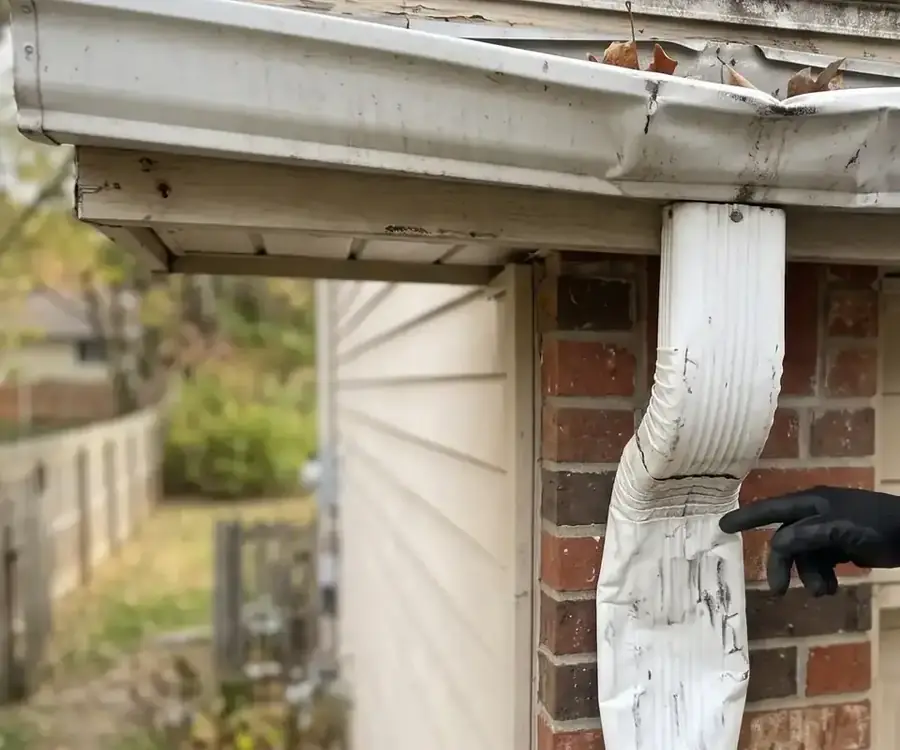
| Twisted or kinked run | Gusts working a loose gutter | Replace section |
| Pulled off with fascia attached | Rotten or soft fascia | Replace fascia, then re-hang |
| Downspout torn off | Missing or loose wall straps | Replace and strap at top, middle and bottom |
| Opened corners | Run flexed in the wind | Re-rivet and reseal, or replace corner |
| Debris damage | Limbs and flying objects | Replace damaged parts |
What should you do after a windstorm?
- Stay safe. Keep away from downed power lines and call 911 if one is down or sparking. Keep people clear of hanging gutters.
- Photograph the damage from the ground before anything is moved.
- Check the roof edge and fascia from the ground for lifted shingles or torn wood.
- Report it to your insurer if the damage is significant.
- Call for an inspection and a written quote.
- Choose the contractor carefully. The Texas Department of Insurance suggests hiring locally where possible and getting written bids, and it is illegal for a contractor to offer to waive your deductible.
How are gutters hung to resist wind?
- Hidden hangers about every two feet, screwed into sound wood, not spikes.
- End caps riveted and sealed, with a hanger close to each end.
- Downspouts strapped to the wall at top, middle and bottom.
- Sound fascia behind every hanger; soft wood is replaced first. See fascia and soffit.
- Guards fastened, not just snapped in, so wind cannot lift them.
Repair or replace?
If wind damaged one or two runs, replacing those sections is usually enough. If the system was also dented by hail, or several runs pulled away, a full replacement may make more sense. See storm season gutter care.
What does a storm inspection cover?
After a big wind event, a contractor should check more than the obvious torn section:
| Check | Why |
|---|---|
| Every hanger on exposed elevations | Wind may have loosened ones that still look fine |
| Corners and end caps | Flexing in wind opens joints |
| Downspout straps | Downspouts often shake loose before they fall |
| Fascia and soffit | Can crack or pull away with the gutter |
| Drip edge and first course of shingles | Lifted shingles let water behind the gutter |
| Guards | Snap-in guards can lift and bend |
Photos of each finding help with any claim.
How do you protect gutters before the next storm?
- Replace spikes with hidden hangers about every two feet.
- Add a hanger within a few inches of each end cap.
- Strap downspouts at top, middle and bottom.
- Replace soft fascia so screws have something to bite.
- Trim branches that could fall on the roof edge.